
KNOWLEDGE BASE · SOCIAL HOUSING
Sworn declaration in social housing: why a signature is not a check
In brief
Every candidate tenant of a social housing unit signs a sworn declaration (verklaring op erewoord) that they do not own a home or building land, including abroad. For property in Belgium, that declaration is checked automatically. For property abroad, that happens only if the housing company takes the initiative itself. This article explains what the declaration is, what it does and does not prove, and how verification does work.
What the sworn declaration entails
When registering for a social housing unit, the candidate tenant declares in writing that they and their household members satisfy the property ownership condition: no home or plot intended for housing construction in full ownership, usufruct, long lease (erfpacht) or building right (opstal), in Belgium or abroad (until 30 September 2025, this also applied to a share). The same declaration is repeated at allocation and in the lease, together with the undertaking to report any later acquisition spontaneously.
The declaration expressly states that it serves to verify whether the property ownership condition is met and that it will be checked with the competent public authority. Anyone who signs therefore knows that verification is possible. That matters for the court, as shown below.
What the law requires
The sworn declaration is not a non-binding form. It is the instrument by which the legislator puts the property ownership condition from the Vlaamse Codex Wonen (Flemish Housing Code) into practice. The former Kaderbesluit Sociale Huur (Framework Decree on Social Rent) prescribed the declaration in Article 3; the Besluit Vlaamse Codex Wonen has carried this over. The decree also provides that the tenant is entitled to the social rent reduction only if they provide the landlord with all necessary information and that information is not fraudulent.
A false declaration therefore has direct consequences: the tenant does not meet the admission conditions, the social rent reduction has been paid unduly and the lease can be terminated. What the property ownership condition precisely entails is described in the property ownership condition explained.
Why a declaration is not evidence
A sworn declaration proves only that someone has declared something. It does not prove that it is correct. For property in Belgium, that does not matter, because the housing company checks the declaration automatically via the data of the FOD Financiën (FPS Finance). For property abroad, there is no automatic source. There, the declaration, as long as no one verifies it, is all the company has.
Housing company De Zonnige Woonst put it sharply in 2019: assets abroad are checked only by means of a sworn declaration, and some people value their word of honour less than a cheaper social rent. When the company had the declarations of six tenants in Türkiye checked, it turned out that all six had real estate registered in their name.
The figures of the Flemish framework agreement confirm that picture on a larger scale: of 677 investigations in 2021 and 2022, 322 produced a hit. In all those cases, the file contained a signed declaration that there was no ownership.
How verification does work
Verification of property abroad is not a home visit and not observation. It is the consultation of the property registers in the country where the tenant comes from or has ties, by someone competent to do so there. In practice:
- Pre-check. A lawyer in the country of investigation checks whether real estate is registered in the tenant’s name in the land registers. At Bureaubuitenland België, this step is usually completed within 1 to 2 weeks.
- Full in-depth investigation. If you decide to proceed after a positive outcome, the extracts and source documents are requested, translated and compiled in a report: which plot, which rights, since when, with which co-owners.
- Valuation. If the value is important, for example for recovery, an estate agent or sworn appraiser values the property.
The result is a report that tests the sworn declaration against data from an official register. With it, the housing company can substantiate its case; the court assesses the evidentiary value of the documents submitted. How we go about this is described under how we work.
What the justice of the peace says
Tenants confronted with an investigation often argue that the sworn declaration is unlawful, that their privacy has been infringed or that they have been discriminated against. The justice of the peace in Hamme rejected all those defences in 2019. She held that the tenant had deliberately and in bad faith withheld information and ordered them to repay the social rent reduction and the investigation costs. The court of first instance of Antwerp confirmed that line on appeal in 2020.
In those cases the sworn declaration worked in the housing company’s favour: it shows that the tenant knew what the rule was, that they knew verification was possible and that they nevertheless made an incorrect declaration. Each ruling relates to a specific case and offers no guarantee for the outcome of another case. The rulings are summarised in case law.
Sources: Vlaamse Codex Wonen and Besluit Vlaamse Codex Wonen; VRT NWS, 18 June 2019; explanation by De Zonnige Woonst.
Frequently asked questions
Yes. The declaration itself states that it will be checked. The Belgian courts have permitted verification abroad in case of a concrete suspicion and, in the Woonhaven case, even called it mandatory.
Ignorance does not remove the duty to report. The rule is in the declaration that the tenant signed. However, in the case of acquisition of an entire home without consideration, the tenant is given one year to dispose of the property, provided they report in time. Since 1 October 2025, an inherited share no longer counts.
Yes. When applying for the living wage (leefloon), the applicant likewise signs a declaration about their resources, including real estate abroad. See means test for the living wage.
See also
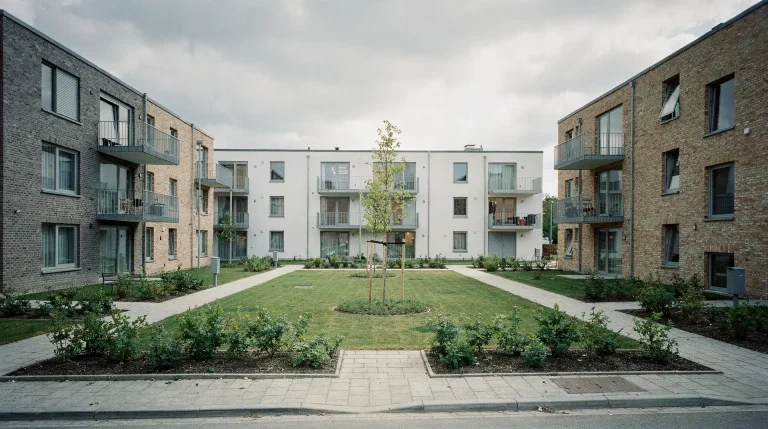
For housing companies
Asset investigation for housing companies: does a social tenant own real estate abroad? Pre-check and reporting for your case.
Read more
Pre-check
Pre-check: an initial investigation into real estate abroad in the name of the person concerned. Usually 1 to 2 weeks, quotation in advance.
Read more
Judgment: checking social tenants’ property ownership abroad (De Zonnige Woonst)
Explanation by the housing company De Zonnige Woonst of the judgment of the justice of the peace in Hamme (6 June 2019) on concealed property abroad.
Read moreDiscuss your case
Do you have a question about real estate abroad? We are happy to discuss which service suits your case. You receive clarity in advance about the assignment, the lead time and the costs.